2025 Scholar: Javier Corrales
In Residence During Week Six: The Global Rise of Authoritarianism
Wednesday, July 30–Thursday, July 31, 2025
8:30–10 a.m.
Hall of Christ (New Location for 2025)
This program is made possible thanks to generous support from the Edward L. Anderson, Jr. Foundation.
Populism v. Democracy
Over the course of two mornings, following his mainstage lecture on July 29, Dr. Corrales will lead participants in an in-depth discussion of populism and democracy. Below, he offers an overview of each day.
Day 1: Populism v. Democracy
We will discuss contemporary forms of populism, as well as differences between left- and right-wing varieties. We will also address the central paradox of populism: while populism is rooted in democracy, it is often utilized by presidents to undermine democracy.
Day 2: The Democracy Advantage
We live in an era of democratic discontent. Everyone seems to have major complaints about the performance of democracy today. Yet evidence shows that democracy remains one of the best political guarantees of economic prosperity and security.
Recommended Reading: Why Populism is the Sugar, Salt, and Fat of Our Politics…With Variations (American Behavioral Scientist, August 2024).
Also please note that the bookstore will have copies of Dr. Corrales’ latest book for sale: Autocracy Rising (Brookings Institution Press, 2023).
About the 2025 Scholar in Residence
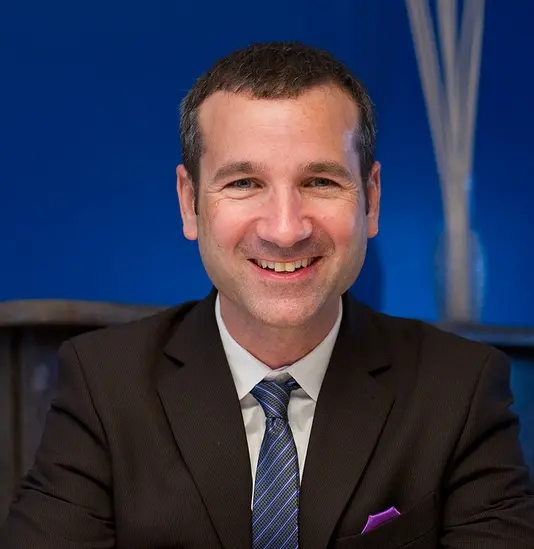
Javier Corrales
The Dwight W. Morrow 1895 Professor of Political Science at Amherst College, Javier Corrales’ research focuses on democratization, presidential powers, ruling parties, democratic backsliding, populism, political economy of development, oil and energy, the incumbent’s advantage, foreign policies, and sexuality. He has published extensively on Latin America and the Caribbean, and his latest book — Autocracy Rising: How Venezuela Transitioned to Authoritarianism — argues that deep democratic backsliding is determined by party system features, variations in autocratic legalism, institutional capture, and innovations in the use of coercion. It is this scholarship that will frame his presentation for the Chautauqua Lecture Series in a week focused on “The Global Rise of Authoritarianism.”
Corrales’ other books include Fixing Democracy: Why Constitutional Change Often Fails to Enhance Democracy in Latin America — which develops the concept of power asymmetry between government and opposition forces to explain whether new constitutions will expand presidential powers, and in the process, hurt democracy — and The Politics of LGBTQ Rights Expansion in Latin America and Caribbean.
Corrales has taught at the Center for Latin American Research at the University of Amsterdam and at the Center for Latin American Studies at Georgetown University, and has offered short courses at the Institute of Higher Studies in Administration in Caracas, the School of Government at the University of the Andes in Bogotá, and at the Universidad de Salamanca.
In 2000, he became one of the youngest scholars ever to be selected as a fellow at the Woodrow Wilson International Center for Scholars in Washington, D.C. Twice a Fulbright scholar, in 2005 in Caracas and 2016 in Bogotá, Corrales obtained his Ph.D. in political science from Harvard University.
Accessibility Information
Restrooms in the Hall of Christ are not accessible. The closest accessible restrooms are at the Hall of Philosophy (lower level).