
Week One
 Pop Goes the Poem!
This playful, subversive workshop bursts with pop culture references, shameless product placement, and strategic profanity. Participants generate poems and prose that remix ads, memes, music, movies, and brands into sharp, witty, emotionally charged work. Through readings, discussion, and revision, writers explore voice, satire, critique, and pleasure, discovering how contemporary culture can energize language and imagery while still delivering craft, intention, and impact—encouraging bold experimentation and creative risk-taking. | Ages 18+
Wk 1, 6/29–7/3 / M, W, F / 8:30 – 10:30 a.m. / Literary Arts Center at Alumni Hall Poetry Room
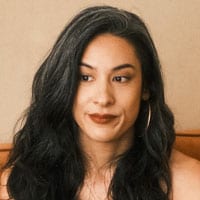
Stephanie Ginese is an author, instructor, and stand-up comedian from South Lorain, Ohio. Her literary work has been featured in Las Palabritas Journal at Harvard University, The Pinch Journal at the University of Memphis, Cleveland Review of Books, and elsewhere. Her debut collection of poetry, Unto Dogs, was released in July of 2022 on Grieveland. She is a 2023 Cleveland Arts Prize winner and a 2024 Creative Impact Fund awardee. Currently, she lives in Cleveland with her two children. She can be found at www.sginese.com or on Sundays at Dunlap’s Corner Bar where she co-hosts the Con Tú Variety Show.
 Wild Writing: Jumpstart Your Storytelling
What is it you plan to do with your one wild and precious life? —Mary Oliver
We say, “I want to write,” but it’s hard to find time and energy. Hence, this generative workshop. From poetry to prose, micro to memoir, our class is for anyone at any stage who longs to invigorate their writing with more joy and connection. Together, we’ll draft, revise, and play as we rediscover the wonder of shared creative practice. | Ages 18+
Wk 1, 6/29–7/3 / M, W, F / 3:15 – 5:15 p.m. / Literary Arts Center at Alumni Hall Prose Room
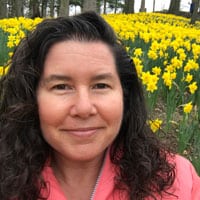
Annmarie Kelly-Harbaugh is the author of Here Be Dragons, a memoir about the wonderful misery of raising children with someone you love. She also hosts Wild Precious Life, a literary podcast about making the most of the time we have. Annmarie teaches writing at Stanford, Cuyahoga Community College, and Ashland University where she works with incarcerated students trying to obtain their degrees. Her essays have appeared on NPR’s All Things Considered, in Today Parenting, Black Fork, Gordon Square Review, and The New York Observer, among others and her work has been staged with the Cleveland Humanities Festival and Listen to Your Mother Pittsburgh. She’s received support from the Ohio Arts Council, Martha’s Vineyard Institute, Tin House, and Il Monasterino della Conoscenza, and was recently named both the Hemingway-Pfeiffer and Erma Bombeck Writer-in-Residence. In her non-writing moments, Annmarie loves kickboxing, karaoke, dogs, ping-pong, books that make her laugh, movies that make her cry, and salads other people make her eat. She lives in Cleveland, Ohio, where she is currently writing a book with the ghost of her father.
Week Two
 Poetry As an Act of Attention
In a world that often feels too loud, the simple act of paying attention becomes a radical form of care. This generative workshop invites you to slow down and allow your “serious noticing” to guide you into new patterns of thought. Drawing inspiration from across the arts—including film, music, and painting—we will explore how different mediums can sharpen our internal lens. This class offers a sanctuary to experiment, observe, and generate new work that explores the possibilities of our attention. | Ages 18+
Wk 2, 7/6–7/10 / M, W, F / 8:30 – 10:30 a.m. / Literary Arts Center at Alumni Hall Poetry Room
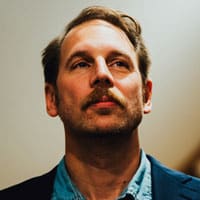
Noah Falck is the author of Exclusions (Tupelo Press, 2020) which was a finalist for the Believer Book Award and the co-authored collection Prerecorded Weather (SurVision Books, 2022) winner of the James Tate Poetry Prize. He released a limited-edition record Fatigue Performance in collaboration with artist Ariel Aberg-Riger and the band Plant Water. His poems have been published in The Kenyon Review, Literary Hub, Poetry Daily, Poets.org and anthologized in Poem-a-Day: 365 Poems for Every Occasion. In 2013, he founded the Silo City Reading Series, an immersive, multimedia poetry event series that takes place inside a 120-foot-high, 100-year-old abandoned grain elevator. He works as Literary Director at Just Buffalo Literary Center and lives in Buffalo, New York.
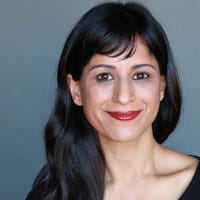 Memoir: Writing the Experiences of Illness and Grief
Illness and grief are formative, shattering experiences that both shape and unite us as human beings. And while both experiences can make us feel profoundly alone and isolated, the stories we read, tell, and write are powerful antidotes, offering connection and hope. In this workshop, we will apply the techniques of memoir to write about this rich landscape. In this supportive and generative workshop, we will read and write together, focusing on lessons on craft (with a focus on voice and scene) but also ensuring plenty of writing time – with prompts – and feedback on your work. | Ages 18+
Wk 2, 7/6–7/10 / M, W, F / 3:15 – 5:15 p.m. / Literary Arts Center at Alumni Hall Prose Room
Dr. Sunita Puri is an Associate Professor of Medicine at the University of California, Irvine School of Medicine, where she is the Director of the Inpatient Palliative Care Service. A 2025 Literature Fellow of the Bogliasco Foundation, she is the author of That Good Night: Life and Medicine in the Eleventh Hour, a critically acclaimed literary memoir examining her journey to the practice of palliative medicine, and her quest to help patients and families redefine what it means to live and die well in the face of serious illness. A graduate of Yale University and the recipient of a Rhodes Scholarship, her writing has appeared in the New Yorker, Atlantic, New York Times, Los Angeles Times, Tricycle, Slate, Wall Street Journal, and the Journal of the American Medical Association, among other places. She and her work have been featured in the Atlantic, People Magazine, PBS’ Christian Amanpour Show, NPR, the Guardian, BBC, India Today, and Literary Hub. In 2019, the Guardian made a mini-documentary of her work with her patients, which has been viewed over 3.5 million times. She has been awarded writing residencies at the Bogliasco Foundation, MacDowell, Yaddo, Hedgebrook, Mesa Refuge, and UCross. A sought-after speaker who has delivered lectures around the world, Dr. Puri is passionate about the ways that the precise and compassionate use of language can empower patients and physicians to have the right conversations about living and dying.
Week Three
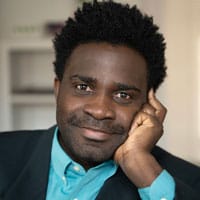 Characters and Voices: Write the Other
Each poem is a step into the unknown, an opportunity to go beyond our lives and our experiences. The poem is a vessel for empathy and connection. In this generative workshop, participants will generate poems in the perspectives of others than themselves, of public and historical persona, and revise works by strengthening the voices in them. We will learn from other poets like John Berryman, Tyehimba Jess, Shara McCallumn, Natasha Trethewey, and more. | Ages 18+
Wk 3, 7/13–7/17 / M, W, F / 8:30 – 10:30 a.m. / Literary Arts Center at Alumni Hall Poetry Room
Sony Ton-Aime is a Haitian poet, essayist, translator, and Executive Director of Pittsburgh Arts and Lectures. He is the author of the poetry collection, Konbit (2026, CMU Press), the chapbook, LaWomann (2019), the Haitian Creole translation of Olympic Hero: The Lennox Kilgour’s Story, and co-founding editor of ID13. His work has appeared and is forthcoming in Artful Dodge, Cream City Review, Idaho Review, Hunger Mountain Review, and Cleveland Review of Books, Consequence Forum, among others.
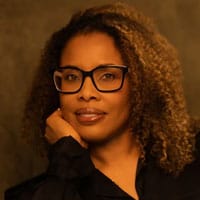 Old Land, New Eyes: The Necessity of Worldbuilding in Historical Fiction
How do you transport readers to the past? You build the world not simply as it was, but in a manner that makes time travel feel imperative for the reader. In this flexible workshop, we will explore how to use historical context not only to create compelling characters and build richer scenes, but to select stories that matter in today’s world. We will discuss the various modes of historical fiction writing, how to decide on the right language, and how to avoid anachronistic pitfalls. As we read workshop submissions, we will also read excerpts from novels and short stories and an essay or two that will guide us through some of the best immersive storytelling practices. | Ages 18+
Wk 3, 7/13–7/17 / M, W, F / 3:15 – 5:15 p.m. / Literary Arts Center at Alumni Hall Prose Room
A child of Trinidadian immigrants, Lauren Francis-Sharma is the author of the critically acclaimed novels ’Til the Well Runs Dry (Picador, 2014), and Book of the Little Axe (Grove Atlantic, 2020), which was the 2020 American Library Association’s “Libraries Transform Book Pick” and finalist for the Hurston/Wright Award in Fiction. Casualties of Truth (Grove Atlantic, 2025), her most recent book, is a riveting literary novel with the sharp edges of a thriller about the abuses of history and the costs of revenge, set between Washington, D.C., and Johannesburg, South Africa.
Francis-Sharma was a MacDowell fellow and is the Assistant Director of Bread Loaf Writers’ Conference at Middlebury College. She holds a BA from UPENN, a J.D. from the University of Michigan Law School, and an MFA from the MFA Program for Writers at Warren Wilson College. She resides near Washington, DC, with her family.
Week Four
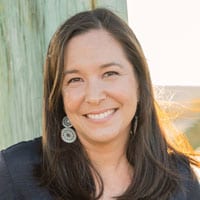 Wild Words: Using Nature in Books for Kids
This generative writing workshop will explore ways nature can shape your story world, grow your characters, and enhance your narrative in children’s writing. Each class will feature writing exercises and lessons on elements of story and plot. You’ll heighten your senses and get plugged into the natural world with child-like wonder. You’ll leave this course with more tools, new pages, and more confidence to grow the wild story that you want to create. Nature is our constant inspiration! | Ages 18+
Wk 4, 7/20–7/24 / M, W, F / 8:30 – 10:30 a.m. / Literary Arts Center at Alumni Hall Poetry Room
Angela May is the co-author of The Islanders, a New York Times bestselling series created with Mary Alice Monroe. All three books in their middle grade series are rooted in the magic of nature and set on a remote barrier island off the coast of South Carolina. The first book in the series, The Islanders, earned several honors, including the South Carolina Children’s Book Award nominee and the Triple Crown Award.
Angela is a South Carolina Lowcountry native and a graduate of the University of South Carolina with a degree in broadcast journalism. Prior to her career in the book publishing industry, she worked as an award-winning reporter, producer, and news anchor.
She lives in Mount Pleasant with her husband, who is an educator, and their two children. You can connect with her at www.angelamaybooks.com.
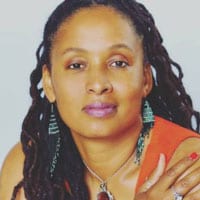 Writing Ekphrastic Poems of Hope in Times of Fear
For centuries, poets have been inspired by art. Some of our most powerful and enduring poems have come from the poet’s way of seeing and responding to an artist’s rendition of their subjects, nature and other incendiary artwork. In this writing workshop, using paintings, music and movies, we’ll learn to write Ekphrastic poems with a focus on finding hope in difficult times. This generative workshop aims to be both a catalyst for producing language of hope in the challenging times of our lives and in society, as well as act as an agent for change and healing.
Wk 4, 7/21–7/23 / Tu, Thu / 8:30 – 10:30 a.m. / Literary Arts Center at Alumni Hall Poetry Room
Kalamazoo, Michigan native Shonda Buchanan is a twice Pushcart Prize and Best of the Net nominee, Oxfam Ambassador and a PEN Emerging Voices Fellow and PEN America Mentor. A professor in the Department of English at Western Michigan University and Alma College’s MFA Program in Creative Writing, Shonda is the author of three collections of poetry, Who’s Afraid of Black Indians?, Equipoise: Poems from Goddess Country and the forthcoming, The Lost Songs of Nina Simone, as well as the award-winning memoir, Black Indian, chosen by PBS NewsHour as a “Top 20 books to read to learn about institutional racism.” Former Board President for Beyond Baroque Literary Arts Center and Board member of the Kalamazoo Poetry Festival and the Kalamazoo Arts Council, Shonda has published in The Mississippi Review, the Los Angeles Times, the LA Weekly, LA Times Magazine, AWP’s The Writer’s Chronicle, Indian Country Today, Red Ink Journal, LA Parents Magazine and freelanced for the International Review of African American Art, Westways, the Los Angeles Review of Books, the Daily Press and Sisters of AARP. Shonda’s forthcoming essay collection, Children of the Mixed Blood Trail, explores mixed-race migration in North America. An English Language Specialist with the Department of State, Shonda is currently shopping a Black Lives Matter book of poetry, America’s Bloodflowers: Poems, as well as Artificial Earth: Poems and Essays, about the first founding mixed race “settlers” of Los Angeles and California Indians. Descendant of the African Mende nation of Sierra Leone, and in North America, the Coharie, Choctaw and Eastern Band Cherokee, and Europeans, Shonda writes on Chumash/Tongva lands in Los Angeles and in the Midwest on Ojibwe/Anishinaabe, Ottawa and Potawatomi lands. Shonda has taught creative writing, research and BIPOC/American literature for the past 24 years.
Week Five
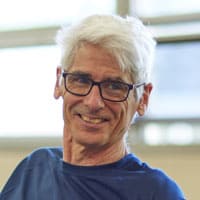 “If a Poem is a House”: Inviting Your Reader In
Both beginning and advanced poets sometimes struggle with making their poems accessible to a wider audience. How do we open the door of our poems to readers? Participants in this flexible workshop will receive feedback on new or older work with a focus on clarity and context while also examining recent poems that touch on these issues. | Ages 18+
Wk 5, 7/27–7/31 / M, W, F / 8:30 – 10:30 a.m. / Literary Arts Center at Alumni Hall Poetry Room
Jim Daniels is the recipient of the 2025-26 Michigan Author Award for lifetime achievement from the Library of Michigan and the Michigan Center for the Book. His new book, Late Invocation for Magic: New and Selected Poems, was published in January. He has authored over thirty collections of poetry, seven collections of fiction, four produced screenplays, and one collection of essays, An Ignorance of Trees, published in 2025. He has also edited many anthologies, including RESPECT: The Poetry of Detroit Music. He is a recipient of two National Endowment for the Arts Fellowships and two from the Pennsylvania Council on the Arts. Other writing awards include the Brittingham Prize, the Blue Lynx Prize, the Tillie Olsen Creative Writing Award, the Milton Kessler Award, and three Gold Medals in the Independent Publisher Book Awards, and his films have won awards in film festivals around the world. His work has been published in The Best American Poetry and Pushcart Prize volumes. A native of Detroit, he lives in Pittsburgh, where he is the Thomas Stockham Baker University Professor Emeritus of English at Carnegie Mellon University. He currently teaches in the Alma College low-residency MFA Program.
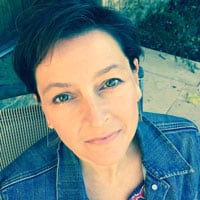 My Life as a Child: Childhood Memoir
Writing about your own childhood has many challenges–the limits of memory, the risk of sentimentality, and the transformation of truth over time. But it also brings great rewards–capturing the past, making meaning of experience, seeing your individual life as part of a larger historical moment. Guided by models of fine writing in this nonfiction genre, we will apply the imaginative tools of literary art to craft the raw material of our early memories in this flexible workshop. No experience necessary. | Ages 18+
Wk 5, 7/27–7/31 / M, W, F / 3:15 – 5:15 p.m. / Literary Arts Center at Alumni Hall Prose Room
Kristin Kovacic’s essays have won the Pushcart Prize, the Pennsylvania Council on the Arts Fellowship, and the Orison Books Prize for Best Spiritual Writing, among other awards. Her work has appeared recently in Slate, Belt, The Coachella Review, Chautauqua, Table Magazine, The Iowa Review, and other publications. She is the author of the essay collection History of My Breath, the poetry chapbook, House of Women, and co-editor (with Lynne Barrett) of Birth: A Literary Companion. She has taught nonfiction writing at every level, including at Winchester Thurston School, the Pittsburgh High School for the Creative and Performing Arts, and in the graduate programs of Carlow University and Chatham University. She lives and works in a deconsecrated Catholic Church on the South Side of Pittsburgh.
Week Six
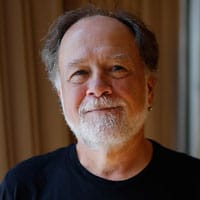 Writing and Revising the Sensuous Poem
Poetry becomes sensuous—as opposed to sensual—when a writer engages a reader’s senses through attentive use of vivid and tactile imagery, a compelling auditory texture, evocative language, and thoughtful poetic architecture, thereby allowing abstract ideas to feel tangible and creating an immersive sensory experience that encourages readers to make powerful emotional connections to poems. In this flexible workshop, we will focus on ways poets draft and revise poems toward sensuousness and intimacy between readers and poets. | Ages 18+
Wk 6, 8/3–8/7 / M, W, F / 8:30 – 10:30 a.m. / Literary Arts Center at Alumni Hall Poetry Room
John Hoppenthaler’s books of poetry are Night Wing Over Metropolitan Area, Domestic Garden, Anticipate the Coming Reservoir, and Lives of Water, all with Carnegie Mellon UP. He has co-edited a volume of essays on the poetry of Jean Valentine, This-World Company (U of Michigan P). A Professor of English at East Carolina University, his poetry appears in Ploughshares, Virginia Quarterly Review, TriQuarterly, Southern Review, Poetry Northwest, McSweeney’s Internet Tendency, and many other journals and anthologies.
 All Our Voices
Welcoming writers, fiction and nonfiction, all levels; we’ll explore our individual voices, adding to the tapestry of our world. Inspired by readings, discussions of creative process, and how to engage the senses and imagination, students write from prompts, experience, and passions, sharing efforts with this flexible workshop for helpful and collegial input, deepening our voices for literary journeys ahead. | Ages 18+
Wk 6, 8/3–8/7 / M, W, F / 3:15 – 5:15 p.m. / Literary Arts Center at Alumni Hall Prose Room
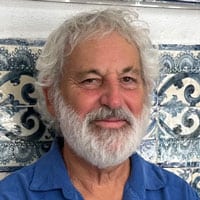
Roy Hoffman is a novelist and journalist with an interest in family, history, and characters of diverse backgrounds struggling to connect. He is the author of four novels: “The Promise of the Pelican,” about an 82-year-old lawyer defending an undocumented worker accused of a crime; “Come Landfall,” about love, war, and hurricanes; “Chicken Dreaming Corn,” inspired by his Jewish immigrant grandparents to Alabama, praised by Harper Lee; and “Almost Family,” set in the Civil Rights era South. He’s written two nonfiction books, “Back Home,” and “Alabama Afternoons.” Roy worked for many years in New York as a journalist and speechwriter, covered features and religion for his hometown newspaper in Mobile, AL., and has written essays for the New York Times, Washington Post, and Wall St. Journal. He resides in Fairhope, AL., and is on the faculty of the Naslund-Mann Graduate School of Writing in Louisville, KY. On the web: www.royhoffmanwriter.com
Week Seven
 Writing Down Your Demons
The word demon, comes from daemon, the Latin word for ‘spirit,’ which derives from the Greek daimon, ‘divine power’ or ‘genius.’ But how can we speak of divine power or beauty when our world rocks with loss, grief, change, and turmoil? Writing poetry allows us to see, name, and shape our demons into terrible beauty. In-class generative writing exercises, reading and discussing sample poems, plus Lynda Barry’s book One! Hundred! Demons, will be our core work. | Ages 18+
Wk 7, 8/10–8/14 / M, W, F / 8:30 – 10:30 a.m. / Literary Arts Center at Alumni Hall Poetry Room
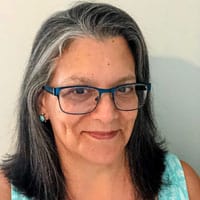
Deborah A. Miranda is a writer and enrolled member of the Ohlone-Costanoan Esselen Nation in California, with Santa Ynez Chumash ancestry. Her hybrid project, Bad Indians: A Tribal Memoir, won the PEN Oakland Josephine Miles Literary Award; the 10th anniversary edition of Bad Indians was released in 2023 as a hardback with 50+ additional pages of material. Miranda is also the author of four poetry collections (Indian Cartography, The Zen of La Llorona, Raised by Humans, and Altar for Broken Things) and co-editor of the Lambda finalist Sovereign Erotics: An Anthology of Two-Spirit Literature. Her scholarship focuses on California Indian experiences within and after Missionization and California Indian storyteller and culture bearers such as Isabel Meadows. She is Thomas H. Broadus, Jr. Professor of English emerita at Washington and Lee University, where she taught Native American Literatures and Creative Writing, and was an affiliate of the Shepherd Poverty Studies Program and the Women and Gender Studies Programs. She and spouse Margo Solod now live in Eugene, Oregon.
 When Your Story Refuses to Fit
What happens when your story refuses to fit one category? This generative workshop explores how to thoughtfully combine elements from different genres while maintaining coherent voice, authentic worldbuilding, and clear stakes. Through the use of craft discussion, generative exercises, and analysis of two sample stories, we’ll examine techniques for making unexpected genre combinations feel inevitable. Students will write new work and develop plans for genre blending projects. | Ages 18+
Wk 7, 8/10–8/14 / M, W, F / 3:15 – 5:15 p.m. / Literary Arts Center at Alumni Hall Prose Room
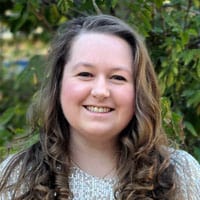
A.J. Eversole grew up in rural Oklahoma where the wide open spaces fed her imagination. An enrolled member of the Cherokee Nation, she works across adult and children’s literature to explore themes of cultural reclamation, resilience, and the ways ancestral knowledge persists in modern worlds. Her stories appear in Legendary Frybread Drive-In (Heartdrum/HarperCollins), Beyond the Glittering World (Torrey House Press), and the forthcoming Never Whistle At Night Part II. When not writing, she reports on Native Voices in literature for Cynsations News Website. Visit her on socials: @ajeversole
Week Eight
 Local Muses: The Poetry of Place
Familiar places hold vast amounts of information—layers of echoes, memories, and presences that can deepen a poem and bring it into conversation with the living communities that surround us. In this flexible workshop, we’ll explore poetic techniques for evoking place through generative prompts and examples. Participants can workshop a finished poem or something they create during the week. All are welcome, including those interested in applying what they learn to other genres, hybrid work, or lyric essays. | Ages 18+
Wk 8, 8/17–8/21 / M, W, F / 8:30 – 10:30 a.m. / Literary Arts Center at Alumni Hall Poetry Room
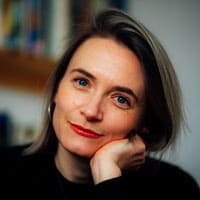
Laura Marris is an essayist, poet, and translator. Her work has appeared in The Kenyon Review, The Believer, Harper’s, The New York Times, The Paris Review Daily, The Yale Review, Words Without Borders, and elsewhere. She has received fellowships and grants from MacDowell, a Katharine Bakeless Fellowship from the Bread Loaf Writer’s Conference, and the Robert B. Silvers Foundation. Her translations include Albert Camus’s The Plague, Paol Keineg’s Triste Tristan (co-translated with Rosmarie Waldrop), and To Live Is to Resist, a biography of Antonio Gramsci. Her work has been shortlisted for the Oxford-Weidenfeld Translation Prize, the Scott Moncrieff Prize, and the French-American Foundation Translation Prize. Her first book, The Age of Loneliness, was published by Graywolf 2024. She teaches creative writing at the University at Buffalo.
 Rewriting History
How can we integrate the past into fiction? In this flexible workshop, we’ll think through the power of history and historical fiction as a literary form. We’ll discuss how fiction can situate itself in the past without feeling didactic or stuffy. We’ll also leave space to explore the importance of historical fidelity versus fabulation, and what the two different modes offer the reader. | Ages 18+
Wk 8, 8/17–8/21 / M, W, F / 3:15 – 5:15 p.m. / Literary Arts Center at Alumni Hall Prose Room
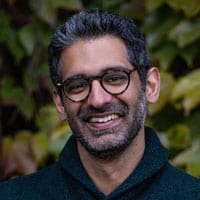
Nishant Batsha is the author of the novels A Bomb Placed Close to the Heart (Ecco/HarperCollins, 2025) and Mother Ocean Father Nation (Ecco/HarperCollins, 2022). He holds a doctorate in history from Columbia University, where he was a Paul and Daisy Soros Fellow. Originally from Northern California, he now lives in Buffalo, NY with his family.
Week Nine
 Begin Again
Beginning a poem does not require certainty—only attention to the world at hand. In this generative poetry workshop, we’ll explore multiple entry points into poems, using place, image, and sound as guides. Prompts will invite surprise, risk, and responsiveness to contemporary landscapes and moments. Alongside generative writing, we’ll discuss revision strategies and ways to recognize what a draft is asking to become. | Ages 18+
Wk 9, 8/24–8/28 / M, W, F / 8:30 – 10:30 a.m. / Literary Arts Center at Alumni Hall Poetry Room
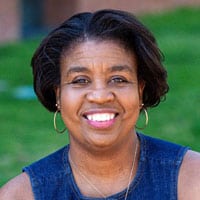
January Gill O’Neil is a professor at Salem State University and the author of Glitter Road (2024), Rewilding( 2018), Misery Islands (2014), and Underlife (2009), all published by CavanKerry Press. Glitter Road received the 2024 Poetry by the Sea Best Book Award and the Julia Ward Howe Prize and was a finalist for several honors, including the Massachusetts Book Award. Her work has appeared in The New York Times Magazine, Poetry, The Nation, and American Poetry Review. A Cave Canem fellow, she served as executive director of the Massachusetts Poetry Festival from 2012 to 2018 and was the 2019–2020 John and Renée Grisham Writer-in-Residence at the University of Mississippi. She is a former chair of the AWP Board of Directors and its longest-serving current board member, and she teaches graduate poetry writing in the summer program at Middlebury College’s Bread Loaf School of English.
 Myths, Folktales, Family Stories, & You
What are the beliefs, customs, and stories of your communities? How might you include them in your writing? This is a generative workshop in which we’ll explore the impact of stories we’ve read and heard in our lives and then proceed to create fiction inspired by our findings. Using writing prompts, discussions of craft and literary techniques, we’ll develop our work and a plan for how to sustain it as we move forward. | Ages 18+
Wk 9, 8/24–8/28 / M, W, F / 3:15 – 5:15 p.m. / Literary Arts Center at Alumni Hall Prose Room
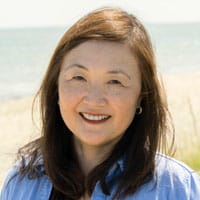
Jimin Han is the author of three novels, Dreamt I Found You, A Small Revolution, and The Apology, which was a Barnes and Noble Discover Pick, named a best audiobook of the year by Booklist, and featured on multiple best books lists by the Los Angeles Times, Vanity Fair, Shondaland, Apple Books and more. Additional writing of hers can be found on NPR, as well as in Poets & Writers, Literary Hub, and other publications. She teaches at The Writing Institute at Sarah Lawrence College and community writing centers. Her work has been supported by the New York State Council on the Arts. Born in South Korea, she grew up in Providence, Rhode Island; Dayton, Ohio; and Jamestown, New York. Currently, she lives outside New York City.